[ Stories ]
Meet the Builders.
E
very story here is a doorway. They are real people. They are archetypes.
All are meant to help someone say, “If they belong, maybe I do too.”
A Korean researcher.
A Brazilian designer.
A Canadian inventor.
An American retiree.
An Russian entrepreneur.
A Bahamian teacher.
An Irish logistics expert.
An Ausie writer.
A Pakistani student.
A Taiwanese robotics engineer.
Each one shows what it looks like when someone decides,
“I am a builder. And I have a place here.”
This is where the world meets itself — one builder at a time.
The One Who Opened the First Door

Bruce Pittman
Bruce Pittman is where the entire project began.
He invited David to NASA Ames, and from that moment the spark that became Project Moon Hut took shape.
His questions sparked the first iteration of the 4Phases, starting with the original ideation at Scratch Restaurant, and for five years met with David and the team to help move the project forward.
He brought us into the National Space Society, where we spoke for three consecutive years, and introduced us to people across the Beyond Earth ecosystem.
And he gave us our name: Project Moon Hut
The One Who Gave Project Moon Hut Its First Symbol
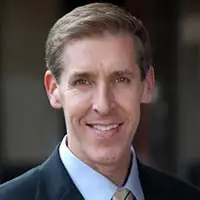
David Cynkin
When Project Moon Hut was still unshaped, still searching for an identity that matched its purpose, David Cynkin stepped in and created the logo we use today as a contribution to the project.
It wasn't just a graphic.
It captured the spirit of the work — hands raised, aspirational, grounded on Earth, with the Moon integrated into the Earth ecosystem.
He gave the project a recognizable face long before the world understood the depth beneath it.
The First Illustrator of the Box with a Roof and a Door on the Moon

Jon Hoefer
When Project Moon Hut needed a way to show what the “Box with a Roof and a Door on the Moon” actually looked like, Jon accepted the challenge.
He created the first caricatures that displayed the symbolism of the Moon and Earth, the speed of change, and the story behind the project — including illustrating the breaking-the-limit metaphor inspired by Roger Bannister's four-minute mile.
Before we had models, we had Jon's imagery.
The One Who Turned a Napkin Sketch Into the PMH Classification System

Jane Lippencott
Before there was structure, before there was a system anyone could use — there was a napkin, a sketch, an idea floating between conversations.
Jane was the one who made it real.
She took that rough outline of values, phases, and classifications and worked with a graphic artist to turn it into a usable design. She translated what was abstract and emotional into a form people could apply, reference, and build on.
Because of Jane, PMH has a Classification System that makes complexity navigable and aides the MearthLink, ecosystem work.
The One Who Gave MearthLink Its First Structural Breath

Jay van Zyl
Before MearthLink had architecture, Jay gave it form.
As a computational social scientist and founder of Ecosystem.AI, he co-wrote the first paper that translated scattered ideas into a coherent platform concept. He showed how identity, collaboration, contribution, and incentives could live inside one system.
Jay didn't just help document the vision. He made MearthLink real enough for others to build upon.
The One Who Revealed the Dimensionality of People and Organizations

Brian Tacoronte
Brian helped us build one of the earliest and rich frameworks inside MearthLink.
Through months of conversations and deep structural thinking, he sparked the dialog of map how individuals and organizations coexist — intertwined, yet distinct.
How a person acts on their own, across history and time, and how organizational structures sit alongside that.
The result was a 400+ column architecture that still informs the way we understand identity, contribution, and behavior inside the platform.
The Keeper of the Sound and the Voice

Dor Aviran
From the very beginning, Dor took on a role that most people overlook but everyone relies on.
He made sure every episode of our podcasts — over a hundred interviews — sounded like they should. Clean, leveled, balanced, without editing the content, only the experience.
Dor has been tireless, consistent, and generous with his skill, ensuring that the message of Project Moon Hut reaches people with clarity and respect.
He is the invisible presence behind every voice we've shared with the world.
The One Who Helped Formalize the Structure

Michael Waldorf
Michael Waldorf of Paulson & Company stepped in to help tie by investment structure and law to the project.
He listened, understood the dynamics of the project, and helped shape the legal structuring for the entire initiative.
He brought in members of the Big Four accounting firms and others to ensure the financial and legal architecture was solid enough to support decades of work.
The One Who Anchored the Mearth Structure in Cayman
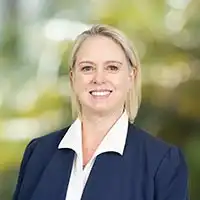
Suzanne Correy
When the ecosystem expanded beyond ideas and needed a legal home capable of supporting worldwide work, Suzanne Correy stepped in.
As a partner at Maples and Calder in the Cayman Islands, she guided the structuring, the filings, the domiciles, and the intricate legal pathways required to set up the Mearth entities properly.
Working alongside the framework that Michael helped define, Suzanne ensured the architecture was sound — compliant where needed, optimized where appropriate, and aligned with the long-term strategy.
She made sure we could pay taxes where taxes are due, operate cleanly across borders, and build an ecosystem ready for a worldwide footprint.
Suzanne didn't just complete paperwork.
She laid the foundation the entire structure stands on.
The One Who Helped Shape the 4Phases Into a Coherent Design
Andreas Bergweiler
Andreas Bergweiler contributed to the visual and structural development of Project Moon Hut's 4Phases, which were originally established in 2014.
Working from the existing framework, he helped translate the phases into detailed two-dimensional diagrams and supported the refinement of their overall structural relationship and scale.
Over a multi-year period, this work contributed to the progression from early conceptual framing and design toward visual models that clarified how the phases could be understood and communicated as a unified pathway.
The One Who Turns Ideas Into Intellectual Architecture

Adam Sacharoff
Every project needs someone who can take a spark and turn it into structure.
That's what Adam brings to Mearth Discovery.
With each new idea — an invention, a pathway, a cross-entity integration — Adam is often the first to see the underlying shape.
He turns rough concepts into protectable IP, coherent licensing models, and frameworks that allow ideas to scale.
Quietly, consistently, he has helped define many of the core bridges inside Project Moon Hut. Adam doesn't just organize the future — he makes it stand on its own.
The Builder Who Turned the 4Phases Into Physical Reality

Glenn Clausson
Before anyone could imagine the 4Phases as buildable, someone had to make them tangible.
Over eight months and more than 3,000 hours, Glenn and Andreas transformed Phase 1 — the Moon Hut — into a detailed scale model. Then he spent 18 months and 10,000 hours building Phase 2 — the Industrial Park.
Glenn didn't just model the work. He made the future visible.
His craftsmanship gave the world its first physical understanding of what Project Moon Hut intended to build.
He turned vision into form — and form into belief.
The One Who Built Project Moon Hut's First Public Home

Markus Gloger
Markus didn't just create a website — he built the first place where the entire ecosystem could live.
He organized decades of ideas, initiatives, and structures into a clean, navigable, welcoming home the world could finally enter.
His work turned complexity into coherence and gave Project Moon Hut a public identity worthy of its scale.
Markus built the doorway through which Builders now walk.
The Economist Who Wrote the First Papers
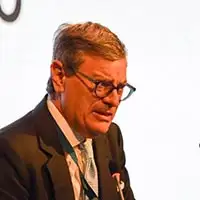
Daniele Schilirò
Daniele, a professor in Italy, spent eight months learning everything about Project Moon Hut so he could write the first economics paper tied to the project.
Then he wrote a second.
He didn't just produce academic work.
He helped shape the economic framing of PMH — its rationale, its potential, its long-term implications.
His contributions became the first scholarly articulation of how the Mearth Economic System could emerge and evolve.
The One Who Aligns Complexity Into Coherent Systems
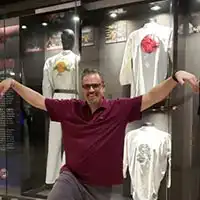
Kyle Hurst
Kyle joined MearthLink at the moment when the platform needed both structure and imagination.
He brought financial modeling, AI structuring, system logic, and architectural clarity — turning a dense constellation of layers, incentives, and workflows into something elegant and buildable.
Kyle's gift is alignment. He understands how decisions echo across years, and he builds with that horizon in mind.
Because of him, MearthLink has a spine — and a path forward.
The One Who Carried Mearth Into the Next Generation
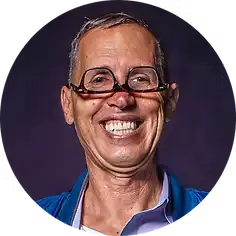
Mike Mongo
Before he became an astronaut teacher, Mike Mongo co-founded OBEY GIANT — a cultural movement that shaped how art, identity, and disruption reached the public.
Later, he brought that same permission-driven ethos to students worldwide, helping them see themselves as part of the space future.
In 2025, Mike published
The KID Astronaut Training Manual
— the first children's book to include Mearth.
He added it without being asked, framing Earth and the Moon as one shared home. Not theory, an invitation.
Because of Mike, a generation will grow up thinking Mearth is simply where they belong.